![Opus1-3-icon-color-1.png]](https://kb.opus1.io/hs-fs/hubfs/Opus1-3-icon-color-1.png?height=50&name=Opus1-3-icon-color-1.png)
Last updated: September 10, 2026
Applies to: Owner / Manager (create and edit); Staff (share links only)
PLUS Feature: No — except Share booking link from a prospect record
Plan: All
Watch the video for where to click. Use this article for which values to pick — especially widget type, visitor access, and Only show timeslots available on a weekly on-going basis.
Table of Contents
- Why you'd use a self-booking link
- Before you start
- How to create a self-booking link
- Test and share your link
- If the flow is empty or wrong
- FAQ
- Related Articles
Why you'd use a self-booking link
Self-booking links exist so a family can enroll without a phone call or an email thread. That matters most during a registration push, when the front desk is the bottleneck: the same two or three people cannot take every trial request, quote every weekly slot, and still greet walk-ins. An Opus1 self-booking link is the URL you put on your website, in an ad, or on a flyer so a parent who decides at 9pm on Sunday can pick a real opening and check out while they are still motivated.
You are not publishing “the studio.” You are publishing a door into a specific slice of it — piano trials with Jordan, Downtown group guitar, the December recital. A well-matched door converts. A mismatched one looks empty, asks for a login, or sends people through the wrong booking story, and they leave.
Most studios run more than one Opus1 link. A public trial URL, a group-class URL, and a current-families-only re-enrollment URL can live side by side. The rest of this article is how to build each door so the family who clicks it sees the thing you meant them to book.
Before you start
Creating and editing self-booking links is an Opus1 Owner or Manager job. Front-desk staff can copy and share a link that already exists. Staff cannot create or edit one. If you are staff and the URL is wrong, hand the fix to an Owner or Manager.
You need at least one service of the type this link will sell — a private lesson, a group class, or an event — with a payment plan you intend families to use. If a service, location, teacher, or plan is not ready, finish that setup first. If the flow is empty or wrong, near the end of this article, lists the four things that have to be in place and links to each.
Promotional URLs, make-up links, payment-plan-type filters, landing pages, conversion tracking, and event registration each have their own article. Link out from the sections below rather than configuring those here.
How to create a self-booking link
Opus1 stores every self-booking URL under Settings → Business → Self-Booking Links.
- Go to Settings → Business
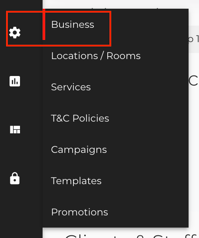
- Open the Self-Booking Links tab.

- Click the edit pencil on the Self-booking links card. Opus1 opens Edit Self-booking links.

- Click Add a custom link.
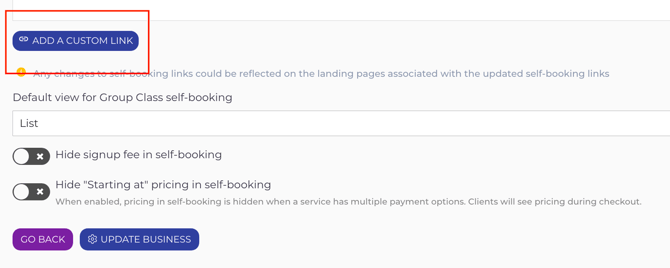
The same card also holds three studio-wide defaults — Default view for Group Class self-booking, Hide signup fee in self-booking, and Hide "Starting at" pricing in self-booking. Those apply to self-booking across the studio, not to one URL. Leave them for later unless you already know you want them changed.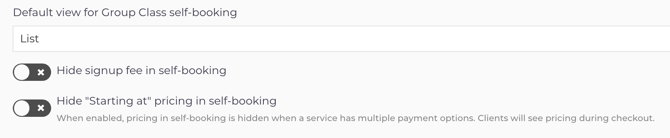
Choose the widget type (cannot be changed later)
Opus1 asks Choose the type of widget for the link before you fill in anything else. This is the most consequential choice on the page. You cannot change it after the link is created. Edit Link has no widget-type control. To switch, you remove the link and create a new one.
| Families are booking | Choose | What they pick |
|---|---|---|
| Private lessons, trials, one-to-one make-ups | Appointment Self-Booking | A teacher and an open time |
| Group classes, courses, workshops | Group Class Self-Booking | A class that already has a day, time, and roster |
| Recitals, showcases, concerts | Event Self-Booking | A performance date |
One URL cannot mix types. An appointment service will never appear on a group class link, and a group class will never appear on an appointment link. If you need a private lesson and a group class reachable from one public address, that is two Opus1 links on a landing page, not one link with both services.
For the three widget types in depth — what each one can filter, and how to offer more than one type from a single public page — see Which widget type should my self-booking link use?. For recitals and event enrollment, see Events Services / Events Self-Booking. For what cannot go on any of these widgets (membership dues, instrument rental), see What services can be self-booked using opus1.io?.
Name the public URL
Choosing a type opens Create Link. The first field is Link name: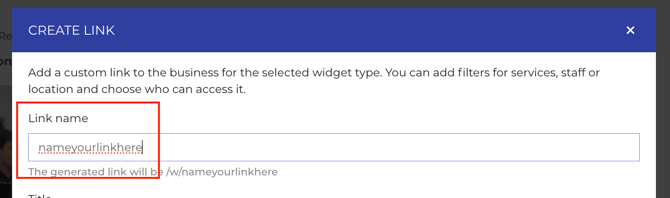
Families see this in the address bar. Opus1 builds the public URL as:
https://[your-business].opus1.io/w/[link-name]
The window shows the path as you type: The generated link will be /w/[link-name]. New links start with a random six-character name. Replace it with something you would print on a flyer — piano-trials, downtown-guitar, fall-group-classes — not x7k2m9.
Rules Opus1 enforces before Add Link will succeed:
| Message | Fix |
|---|---|
Link cannot be empty |
Enter a name. |
Link can only contain lower case letters, numbers and dashes |
Remove spaces, capitals, and punctuation. Summer Trials→ summer-trials |
This link already exists |
Another link already uses that name. Pick a different one. |
Renaming a live link later replaces the URL. The old address stops working. Flyers, website buttons, and landing-page cards that pointed at the old name break. If the URL is already circulating, add a new link and leave the old one up until traffic dies down.
Set a title and photo
Title and Photo are what families see on a landing page card. Description is optional.
Set Title and Photo now, even if you have no landing page yet. Opus1 will not let you add a self-booking link to a landing page until both are set. The landing-page picker greys the link out as w/[link-name] (title and photo not set) — or (title not set) / (photo not set) if only one is missing. That message does not say to come back here and edit the self-booking link. This is where you fix it.
A /w/ URL still works without a title or photo. Opus1 will not show that link as a card on a /m/ landing page until both are set — including if you add the link first and clear the title or photo later. If a campaign page is coming, fill both in at creation so you are not blocked.
Choose one general link or several targeted links
A single unfiltered “book with us” Opus1 link is the lowest-maintenance option: one URL on the website, one URL to update. Targeted links — one teacher, one location, one program, existing families only — convert better because the family lands on exactly what the ad or flyer promised. They also multiply upkeep. Every new service, teacher, or location that should appear on a filtered link has to be added by hand.
| Situation | What to build |
|---|---|
| Small studio, one location, one main offering, one website button | One unfiltered link of the matching widget type |
| Ads, flyers, or teacher pages that promise a specific program | A filtered link for that slice |
| Private lessons and group classes from one public URL | Two links, then a landing page |
| Current-family re-enrollment or make-ups, not prospects | A separate link with visitor access off (see below) |
Most studios doing a registration push use a short set of targeted public links, not one catch-all.
Filter services, locations, and staff
Under Add additional optional filters: Opus1 shows the filters that apply to this widget type.
Select services — empty vs populated is the trap.
- Leave it empty to include all services of this link’s type that are eligible for self-booking. An empty appointment link is “all private-lesson services,” not “everything the studio sells.” Group classes will not appear. Recitals will not appear. Empty does not mean broken.
- Pick specific services when this URL should sell a slice (Piano Trial, not every instrument). A service you add to the studio later does not join a filtered link automatically. Someone has to edit the link and add it, then click Update Business.
- Select All (N Options) is not the same as leaving the field empty. Select All stores today’s services as a filter. Next month’s new guitar program will not appear until you come back and add it. Leave the field empty if you want new services of this type to show up on their own.
Filter by location (appointment and group class links; not event links):
- Empty means all locations.
- Populated keeps pointing at the locations you picked. After the studio opens a second location, this link will not include it until you add it.
(optional) Filter by staff (appointment links only):
- Empty means teachers who teach that service.
- Populated means only the teachers you picked. Use this for a “book with Jordan” URL. To hide a teacher from self-booking studio-wide rather than on one link, see How do I prevent my teachers from being available for self-booking?.
(optional) Filter by payment plan type appears on appointment links only. Use it when a trial URL should not also show a monthly membership, or the reverse. See Using payment plan type filters on self-booking links. Enabling a plan for self-booking at the service is a different step: How do I enable my payment plans for self-booking?.
Weekly ongoing timeslots (appointment links)
This Opus1 toggle is appointment-only. The label is Only show timeslots available on a weekly on-going basis. Helper text: "If turned on, only timeslots available on an on-going basis (including tolerated conflicts) will be offered."
New appointment links start with this off.
Turn it on for recurring weekly lesson enrollment. The family should only see times a teacher can actually keep week after week. A one-off gap on Tuesday that is already taken next Tuesday is not a weekly slot.
Leave it off for trials and one-off lessons. The family is booking a single visit. Scattered openings are exactly what you want to show.
The failure mode: a trial link with this left on. A teacher has plenty of scattered openings but no clean recurring weekly slot. Opus1 offers none of those openings. The calendar looks empty for no reason the family can see. If you are building a trial or make-up URL, confirm this is off before you share it.
Make the link public or clients-only
Make accessible by visitors controls who can open the URL without signing in. Helper text: "If turned off, only logged-in clients will be able to access the link."
New Opus1 links start with this off. A brand-new link is private until you turn it on.
Turn it on for anything you share publicly — website, social, ads, QR codes, prospects with no login. A login wall stops the people you paid to reach.
Leave it off for a current-families-only link. That is a legitimate configuration, not a bug. Re-enrollment, member pricing, and make-ups often belong here so a forwarded URL does not become an open catalog. For a dedicated make-up URL, see How do I create a self-booking link for make-ups?.
On the link list, Opus1 shows Accessible by: Everyone when this is on, or Accessible by: Clients only when it is off. If families report that a link you meant to be public is asking them to sign in, see My self-booking link sends clients to a login page.
Offer the link as a call to action
Call to action is optional. Helper text: "Offer this link as a call to action on clients profile with an empty schedule."
When the toggle is on, Call To Action Title is required (placeholder: e.g. 'Book a lesson' ). Opus1 shows that title on enrolled clients’ profiles when their schedule is empty.
Turn it on when this link is the next step you want for a student who is not currently booked — “Book a lesson,” “Enroll in a class.” Leave it off when the URL is only for a public flyer or ad and should not appear inside the client profile.
Default to staff or location (appointment links)
Default primary selection decides whether the family starts with Staff or Location. New Opus1 appointment links default to Staff.
Choose Staff when you market a teacher. Choose Location when you market a neighborhood studio and the family should pick a place first. See How do I set my self-booking links to default to location instead of staff when clients book?.
Save the link
- Click Add Link. The window closes and the link appears in the list with its
/w/…address. Nothing is live yet. - Scroll to the bottom of the page and click Update Business.
- Wait for Business updated successfully.
Add Link puts the link in the form on your screen. Update Business is the Opus1 save — that click writes the URL to the studio. If you click Go Back, refresh, or close the tab after Add Link but before Update Business, the link is gone.
To change an existing link, click Update on that row, edit, click Update in Edit Link, then Update Business again.
For what happens when two people edit business settings at once, what the Data Conflict Detected message means, and how to recover unsaved work, see Saving self-booking links: the Update Business step.
Test and share your link
The public URL format is: https://[your-business].opus1.io/w/[link-name]
[your-business] is your Opus1 subdomain — the name in Settings → Business, not your marketing website. Booking links live on your .opus1.io subdomain. Changing the domain on your public website does not change these URLs and does not break them.
Before you share it, test it
Always open the URL in a private / incognito window, or on a phone that has never signed in to your studio.
Owners, Managers, and Staff bypass the client and visitor visibility filters. A broken link looks fine to the person who built it. This is the single most common reason a studio believes a link works when it does not.
Test as a stranger:
- The booking flow should open with no login prompt if Make accessible by visitors is on.
- The services, teachers, and times you intended should be visible.
- If this is a trial link, confirm Only show timeslots available on a weekly on-going basis is off, so scattered openings still appear.
Do not test by clicking a link inside an Opus1 email sent to your own address. Those messages can sign you in automatically, so a restricted link looks as if it were public.
If the flow is empty, the wrong type, or missing a service you expected, do not keep retuning filters at random. Work the checklist in If the flow is empty or wrong below.
Where to put the URL
Link out to Opus1 from your website. Add a button or text link that opens https://[your-business].opus1.io/w/[link-name] (or a landing-page URL). Do not embed the booking flow in a third-party site builder (Wix, Squarespace, WordPress iframe, and similar). Opus1 support cannot troubleshoot those external pages, and studios have lost real time discovering an embed was the problem. The supported embed is the lead-capture form, not the booking widget — see How can I embed the lead capture form in my website?.
Several offerings behind one public URL. Put two or more self-booking links on a landing page. Each card still needs its own title, photo, and visitor-access setting.
A discount on the link. Do not rebuild the link. Append the promotion to the existing URL. See Using promotional links.
Send a link from a prospect record (Opus1 PLUS). On the prospect, click Share booking link. Opus1 emails that person a specific URL. See Share booking link.
Ads and conversion tracking. See How do I enable conversion tracking? and How do I track opus1.io self-bookings with Google Tag Manager?.
If the flow is empty or wrong
Visitor access controls whether someone can open the link. It does not control what the link has to show. If the URL loads but the booking flow is empty, or a service you expected is missing, work these five checks in order rather than retuning filters at random.
| # | Check | Where it lives |
|---|---|---|
| 1 | Is the widget type right? A group class link never lists appointment services, and the picker gives no error — the service is simply absent | Which widget type should my self-booking link use? |
| 2 | Are your services visible to clients and visitors? An owner testing while signed in sees a healthy flow that visitors see as empty | How do I make my services visible to clients and/or visitors? |
| 3 | Are payment plans enabled for self-booking? A service with no self-bookable plan will not appear | How do I enable my payment plans for self-booking? |
| 4 | Do your locations have open hours? No open hours means no bookable times | How do I add open hours to my locations? |
| 5 | Do your teachers have appointment availability? Appointment links read staff availability, so a teacher with none offers nothing | How do I prevent my teachers from being available for self-booking? |
Two more worth ruling out on appointment links specifically. Only show timeslots available on a weekly on-going basis left on will hide every scattered opening, which is the usual cause of an apparently empty trial link. And a Select All services filter stores today's list, so a service added to the studio later will not appear until someone edits the link.
If a room requirement is blocking bookings rather than a filter, see Service not available for room and How do I assign services to rooms?.
FAQ
Do families need an Opus1 account before they can book? No. On a public link, they browse first. Opus1 asks them to create an account or sign in inside the booking flow, at checkout — not before they can see times. Turning on Make accessible by visitors changes when they register, not whether.
If I rename a live link, does the old URL keep working? No. Opus1 replaces the path. https://[your-business].opus1.io/w/[link-name] stops resolving once you click Update Business. Website buttons, flyers, and landing pages that used the old name need the new one.
Can I add a discount to a self-booking link? Yes. Build the Opus1 link as you would for full price, then share a promotional URL rather than a second widget type. See Using promotional links.
Are Owners and Managers told when someone self-books a trial? Opus1 can notify you. See Are Owners and Managers notified when a client self-books a trial lesson?.
Can I change filters on a link that is already on my website? Yes. In Opus1, open Edit Link with Update, change services, locations, staff, visitor access, or the weekly toggle, click Update, then Update Business. The public path stays the same unless you change Link name. Widget type still cannot be changed; create a second link if you picked the wrong type.
Related Articles
Specialized links
- How do I create a self-booking link for make-ups?
- Using payment plan type filters on self-booking links
- How do I set my self-booking links to default to location instead of staff when clients book?
- Events Services / Events Self-Booking
- Using promotional links
Sharing and marketing
- Using landing pages
- Share booking link
- How can I embed the lead capture form in my website?
- How do I enable conversion tracking?
- What are automated conversions?
- How do I track opus1.io self-bookings with Google Tag Manager?
- Introduction to Google Tag Manager (GTM)
- Conversions Stats
- Are Owners and Managers notified when a client self-books a trial lesson?
Setup these links depend on
- How do I enable my payment plans for self-booking?
- How do I reorder my payment plans for self-booking?
- How do I make my services visible to clients and/or visitors?
- How do I prevent my teachers from being available for self-booking?
- How do I add open hours to my locations?
- How do I assign services to rooms?
- Service not available for room
- How do I customize the client notes requested at a self-booking?
- How do I allow my clients to self-cancel unpaid appointments?
- How do I create conditional questions for my registration and lead forms?
- What services can be self-booked using opus1.io?