![Opus1-3-icon-color-1.png]](https://kb.opus1.io/hs-fs/hubfs/Opus1-3-icon-color-1.png?height=50&name=Opus1-3-icon-color-1.png)
Understanding SEPA Direct Debit
SEPA (Single Euro Payments Area) is an initiative designed to simplify bank payments across Europe by standardising how euro transactions are processed.
SEPA Direct Debit enables businesses to debit any EUR-denominated bank account within the SEPA region once customer authorisation (a mandate) has been obtained.
This makes it especially useful for businesses operating across multiple European countries or managing recurring payments.
Key Features of SEPA Direct Debit
Reusable Payment Method
- Supports recurring and one-off payments
- Once a mandate is collected, it can be reused for future transactions
Processing & Settlement Timeline
- SEPA Direct Debit is a delayed notification payment method
- Payments typically take around 5 business days to settle
- Funds are not immediately available after payment initiation
Transaction Limits
- Standard limit of €10,000 per transaction
- New users may have an initial weekly limit of €10,000, which increases over time
- Higher limits can be discussed by reaching out to finance@opus1.io
Availability & Currency
- Region: SEPA (EU countries plus others such as Norway, Switzerland, and Monaco)
- Currency: Euro (EUR) only
Refunds & Protections
- Customers benefit from strong consumer protections
- Refunds are typically available:
- Up to 8 weeks for authorised payments
- Up to 13 months for unauthorised payments
How SEPA Direct Debit Works
Step 1: Customer Adds Payment Method
- Customers log into their opus1.io account
- The customer selects the credit card icon to add their payment details
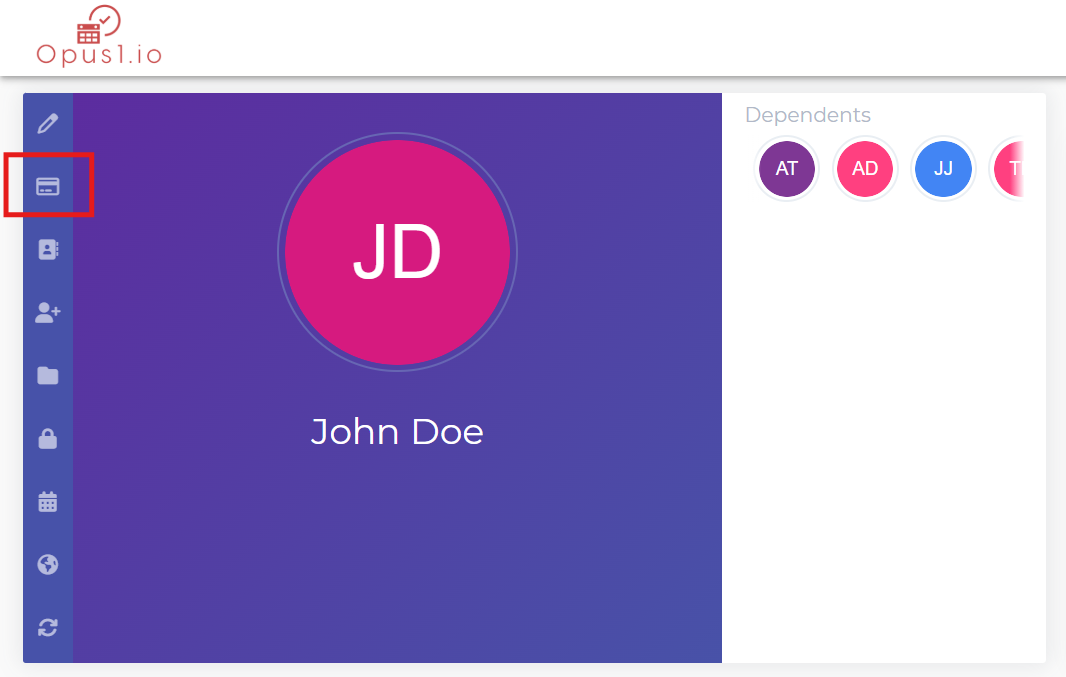
- The customer provides their bank account details on the pop up
This authorisation allows your business to debit their account.
Step 2: Mandate Creation
- A mandate is created automatically within Opus1 Payments, giving permission to debit the account
- Mandates can be used for:
- One-off payments
- Recurring payments
Customers can revoke mandates at any time.
Step 3: Payment Processing
- Payment is initiated through opus1.io on the invoice
- Status remains processing during clearing
- Funds are not immediately available
Step 4: Settlement
- Payment is confirmed after processing
- Funds are deposited into your account (typically within ~5 business days)
Compliance & Requirements
Mandates (Authorisation)
- A valid SEPA mandate is required before debiting a customer
- Mandates must include:
- Customer details
- Bank account (IBAN)
- Payment terms
Customer Notifications
Businesses must ensure customers are informed about:
- The terms of the mandate
- The timing and amount of debits
Opus1 Payments helps facilitate this process during payment collection.
Supported Scheme
- Opus1 Payments supports the SEPA Core scheme, which works for both individuals and businesses
Disputes & Chargebacks
SEPA Direct Debit includes strong customer protections:
- Customers can request refunds within defined timeframes
- Disputes may result in funds being withdrawn from your account
- It is important to monitor disputes via the Stripe Dashboard
Setting Up SEPA Direct Debit
1. Enable the Payment Method
- Submit required information when creating your Opus1 Payments accounts to activate SEPA based on your location
- Ensure all transactions are processed in EUR
2. Collect Mandates
- Use opus1.io to:
- Collect IBAN details by adding payment method to client’s profiles
- Capture mandate acceptance
3. Take Payments
- Use clients payment method to pay invoices through opus1.io
- Use it for:
- One-off payments
- Subscriptions
- Recurring billing
Best Practices for Businesses
1. Plan Around Processing Delays
- Allow at least 5 business days for settlement
- Avoid using SEPA for time-sensitive payments
2. Use for Recurring Payments
- Ideal for subscriptions, memberships, and regular billing
- Reduces manual payment collection
3. Monitor Payments in Opus1 Payments
Regularly check Opus1 Payments to:
- Track payment status
- Identify failed or pending payments
- Manage disputes and refunds
4. Communicate Clearly with Customers
Ensure customers understand:
- When payments will be debited
- Processing timelines
- How to cancel or update their mandate
Summary
SEPA Direct Debit is a reliable and standardised payment method for collecting euro-denominated payments across Europe. It is particularly well-suited for recurring and cross-border transactions.
To successfully implement SEPA Direct Debit:
- Collect valid mandates
- Plan for delayed settlement
- Communicate clearly with customers
- Monitor payments and disputes regularly
Following these practices will help ensure smooth payment operations and a positive customer experience.
For more information, refer to the Stripe SEPA Direct Debit documentation here.